A Silent Epidemic with loud consequences: Pollution in Peru’s Moche River
November 9, 2025
Monthly News
September 30, 2026A Silent Epidemic with loud consequences: Pollution in Peru’s Moche River
November 9, 2025Monthly News
September 30, 2026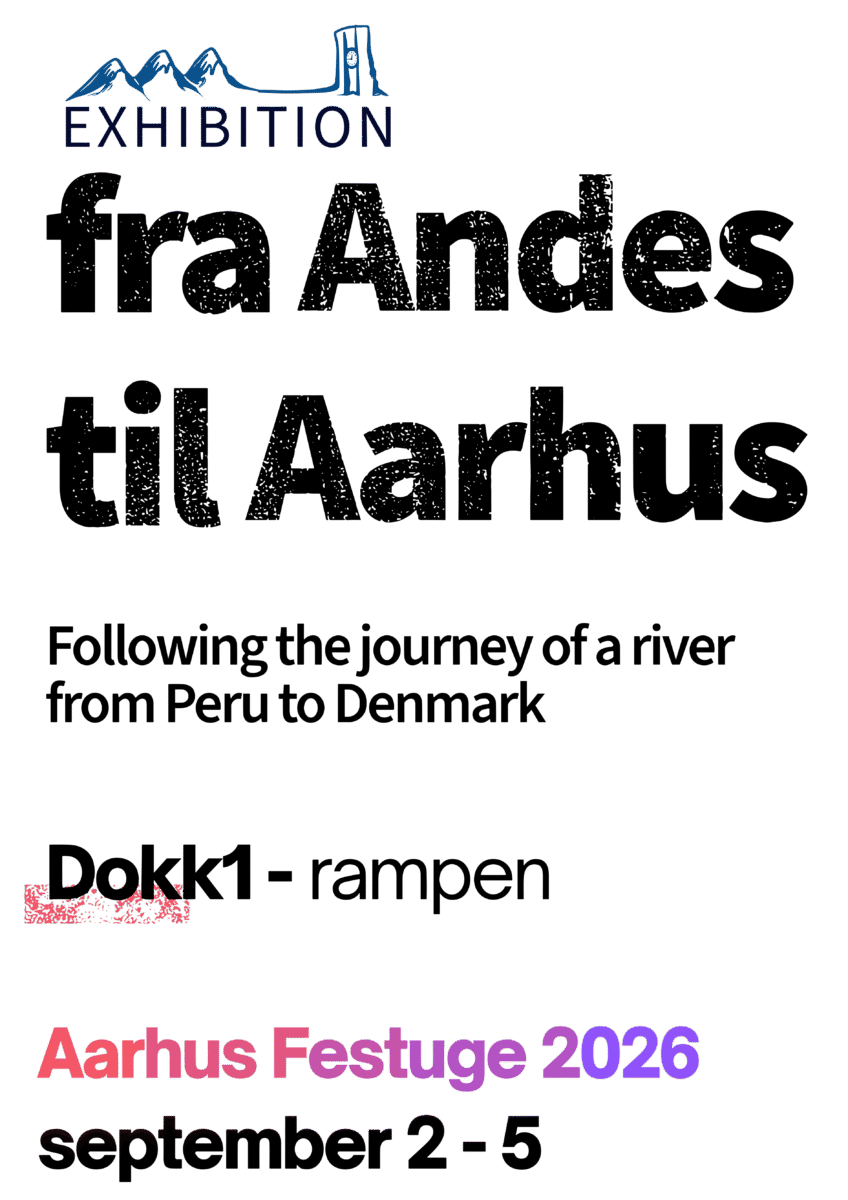
WHAT IS IT ABOUT?
Fra Andes til Aarhus is an environmental and cultural exhibition that follows the journey of water, from the Andes in Peru to everyday life in Denmark.
The event brings together visual panels, interactive installations, and a short documentary film, developed by the environmental NGO Saving Rivers and Lakes in collaboration with students from Aarhus University.
Through these elements, the exhibition explores how rivers shape societies, and how global systems of production and consumption connect distant places through water.
Taking the Huallaga River in Peru as a starting point, the exhibition looks at how rivers are affected by human activity, and how these changes impact environments, communities, and daily life, while connecting these realities to a Danish context.
Visitors are invited to explore, engage, and interact with the exhibition, connecting with rivers, people, and nature across Peru and Denmark.
THE EXHIBITION
The exhibition follows a journey in which visitors are invited to take a moment of pause, curiosity, and exploration.
It begins with a simple question: why do rivers matter?
Rivers are the arteries and veins of the Earth. Human societies have grown around them, and animals and entire ecosystems depend on them. They are more than water, they are culture, sources of life, and connection.
From this starting point, the journey unfolds through the relationship between freshwater systems, human societies, and environmental change.
Through images, stories, and visual material, the journey follows the path of water from the high Andes toward the Amazon basin. Following the Huallaga River in Peru, it brings together different perspectives that reveal how communities are affected by river pollution and its environmental, social, and health consequences.
Along the way, it becomes possible to see how those closest to the river live in relationship with it, including Indigenous communities such as the Shipibo people, whose connections to water are deeply rooted in culture, territory, and everyday life.
Connections begin to appear along the way between rivers, nature, places and people.
COLLABORATION WITH STUDENTS
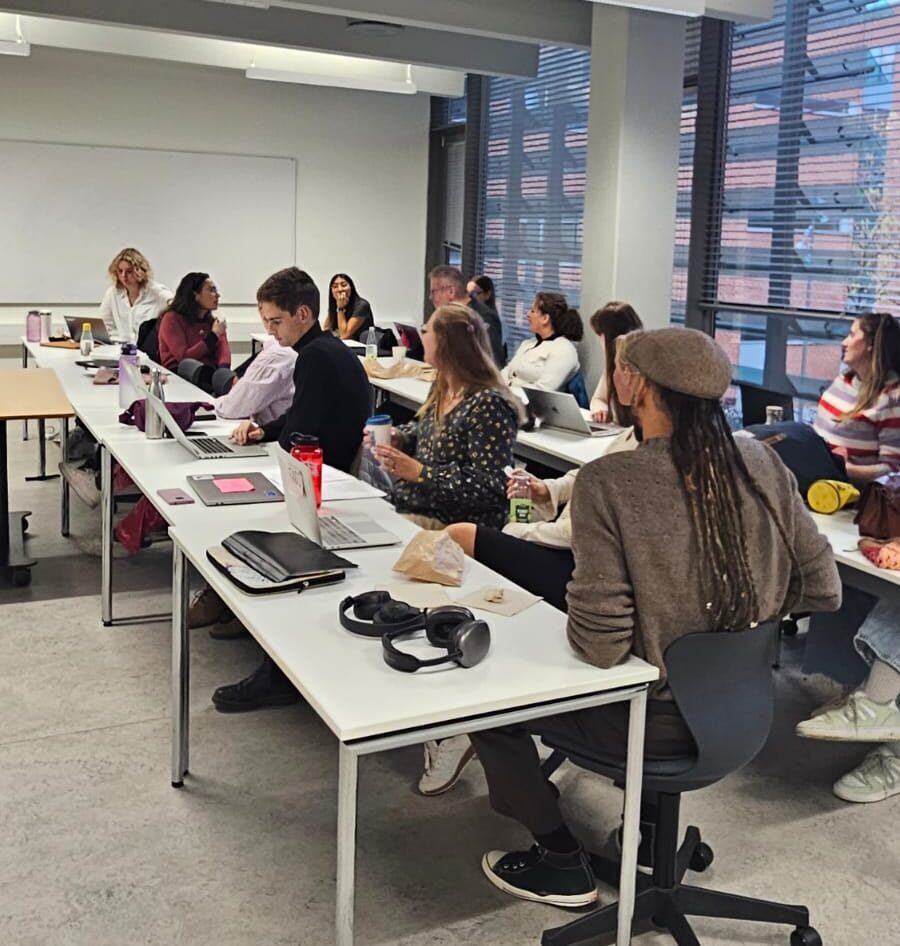
The exhibition is developed in collaboration with Aarhus University, where a group of students engages with its themes as part of their course. Their involvement is an key part of the project, bringing local perspectives and helping connect global environmental issues to a Danish context.
Working with literature and other materials, students explore relationships between nature and humans, with a particular focus on rivers. Their reflections become part of the exhibition itself.
THE FILM
The exhibition is presented alongside a short documentary film that brings together voices and lived experiences from Peru.
Through interviews and visual material, the film follows the role of rivers in shaping human life, from their importance in the development of societies to the ways they are affected by contemporary environmental change.
Using the Huallaga River in Peru as a central thread, the film presents perspectives from local communities, environmental workers, health professionals, and cultural voices, including representatives of the Shipibo people in the Peruvian Amazon.
Their words and experiences offer more than explanation, they reflect ways of living with the river, and what it means when that relationship is altered.
Connecting Peru and Denmark the film reveals how rivers today are part of wider systems of production and consumption that extend far beyond their immediate surroundings.
The film invites a closer, more personal understanding of the impacts of pollution, seen not from a distance, but through the people and environments that live with it.
Wednesday 2.09
Exhibition
Thursday 3.09
Exhibition
Friday 4.09
Exhibition
Film screening:
"Fra Andes til Aarhus"
(Møderum 2 / M2)
16:00
20:00
Saturday 5.09
Exhibition
This website is co-funded by the European Union. Its contents are the sole responsibility of Saving Rivers and Lakes and do not necessarily reflect the views of the European Union.